
Ice Vest vs Cooling Vest — What's the Difference?
Ice Vest vs Cooling Vest — What Is the Difference?
If you have been searching for body cooling products, you have probably seen both "ice vest" and "cooling vest" used to describe similar-looking products. The short answer: they describe the same thing. The longer answer reveals important differences in how different vests actually work — which matters a lot when you are choosing one.
Ice vest vs cooling vest — the terminology
"Ice vest" and "cooling vest" are interchangeable terms for a body-worn garment designed to lower skin temperature. The Arctic Heat vest is marketed under both names because customers search for both. The vest itself uses the same gel cooling technology regardless of what you call it.
What actually matters is the cooling method — and there are three distinct technologies on the market, with very different performance profiles.
The 3 types of cooling vest compared
| Type | How it works | Weight | Works in humidity? | Duration |
|---|---|---|---|---|
| Gel conduction (Arctic Heat) | Chilled gel draws heat from the skin by direct contact | 2.2 lbs | Yes | Up to 2 hours |
| Phase-change (PCM) | Wax-based packs melt at a fixed temperature, absorbing heat | 5 to 9 lbs | Yes | 2 to 3 hours |
| Evaporative | Water-soaked fabric cools as it evaporates | 1 to 2 lbs | No — fails in humidity | Variable, often 30 to 90 min |
Why gel conduction is the best choice for most people
Phase-change vests provide reliable cooling but are significantly heavier and bulkier — 5 to 9 lbs of insert packs that must be frozen separately and inserted before use. They are not practical for wearing under clothing or during physical activity.
Evaporative vests work by allowing water to evaporate from the fabric surface — but in humid conditions, the air is already saturated with moisture and evaporation slows or stops entirely. This makes them unreliable in summer conditions across much of the USA.
The Arctic Heat gel vest works by conduction — direct heat transfer from the skin to the chilled gel. This works regardless of humidity, works while you are wearing it under clothing, and requires no inserts or separate packs to manage.
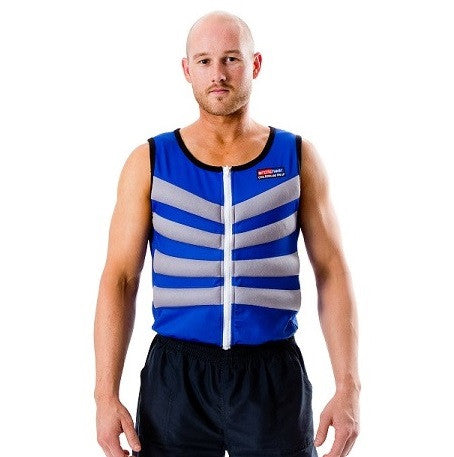
2.2 lbs. Works in humidity. No inserts. Cold up to 2 hours. Used at 6 Olympic Games.
Shop Now →Frequently asked questions
Is an ice vest the same as a cooling vest?
Yes — they are the same product described by different names. Some manufacturers use "ice vest" to emphasise the freezing method; others use "cooling vest" as a broader term. The Arctic Heat vest is sold under both names.
Do ice vests actually work?
Yes. Research consistently shows that gel cooling vests reduce skin temperature, lower sweat rate, and improve performance in the heat. The Arctic Heat vest has been validated across six Olympic Games and used by MS organisations, industrial employers, and endurance sport teams worldwide since 2003.
Which type of cooling vest lasts the longest?
Phase-change vests typically last 2 to 3 hours but weigh 5 to 9 lbs. Gel vests like Arctic Heat last up to 2 hours and weigh 2.2 lbs. For most applications, the weight and wearability advantage of the gel vest outweighs the marginal duration difference.